Approach & safety
The field is a learning environment. We prepare it with care.
Good facilitation and good field practice share a principle: notice what is changing, communicate early, and adjust before a small issue becomes the work.
Design principles
Challenge in service of learning, not performance.
- 01
Relevant by design
We begin with the organization’s real question, then choose an exercise and setting that can illuminate it.
- 02
Participation with dignity
There is no public ranking, forced disclosure, or manufactured fear. Multiple ways of contributing are built into the work.
- 03
Reflection with teeth
Facilitators help the group name observable patterns and convert insight into a decision, practice, or agreement.
Field readiness
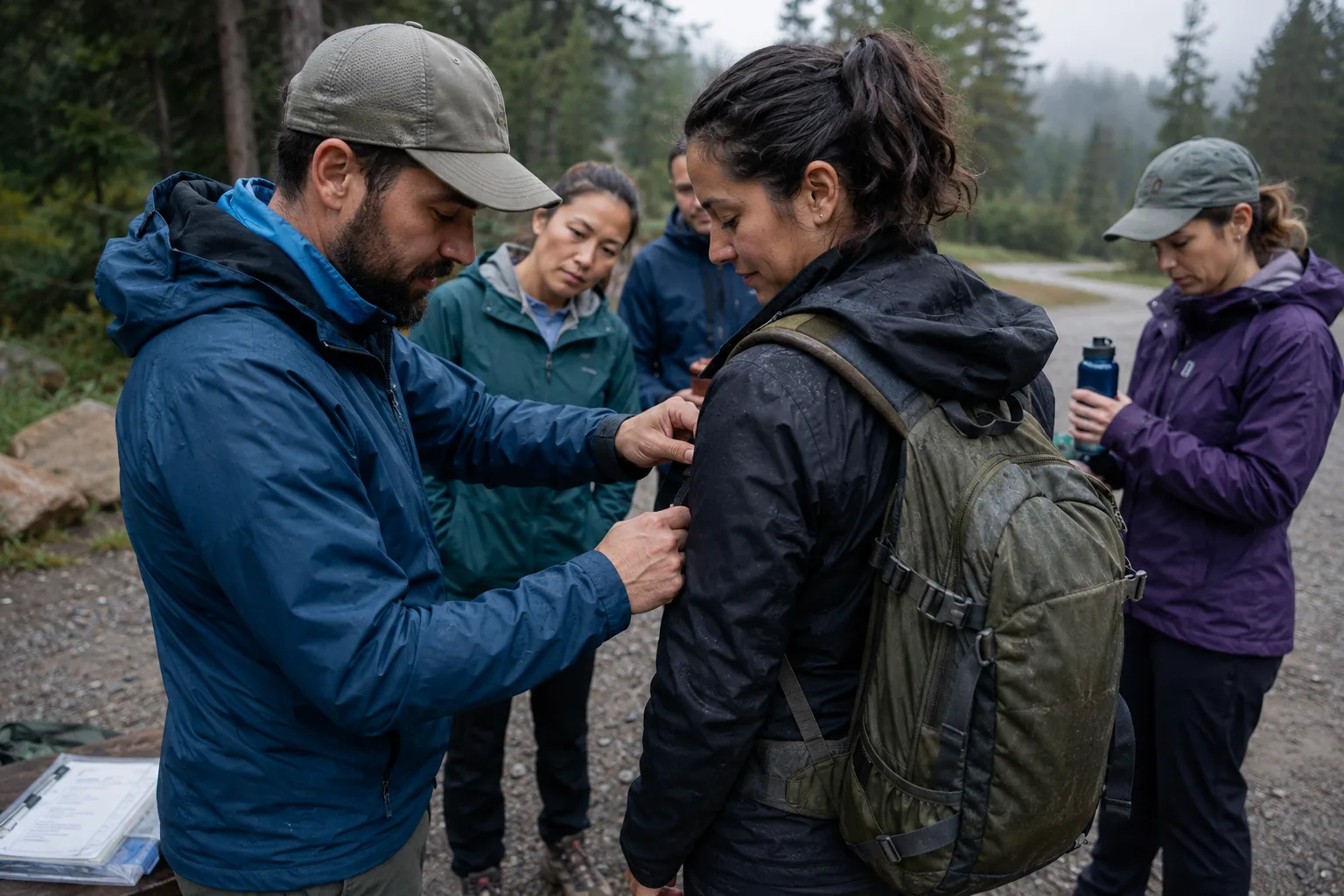
Safety is preparation, communication, and judgment.
Before the program
- Route and seasonal condition review
- Participant access and health considerations
- Clear clothing, equipment, and hydration guidance
- Weather and alternate-site plan
In the field
- Opening condition and equipment check
- Defined group boundaries and communication
- Facilitator-led pace and route adjustments
- Documented emergency communication plan
Final routes and operating practices are confirmed for each program’s season, location, group, and conditions. Northline does not use technical climbing, whitewater, or survival scenarios in these programs.
Facilitators
Calm presence. Clear process. Respect for the group.
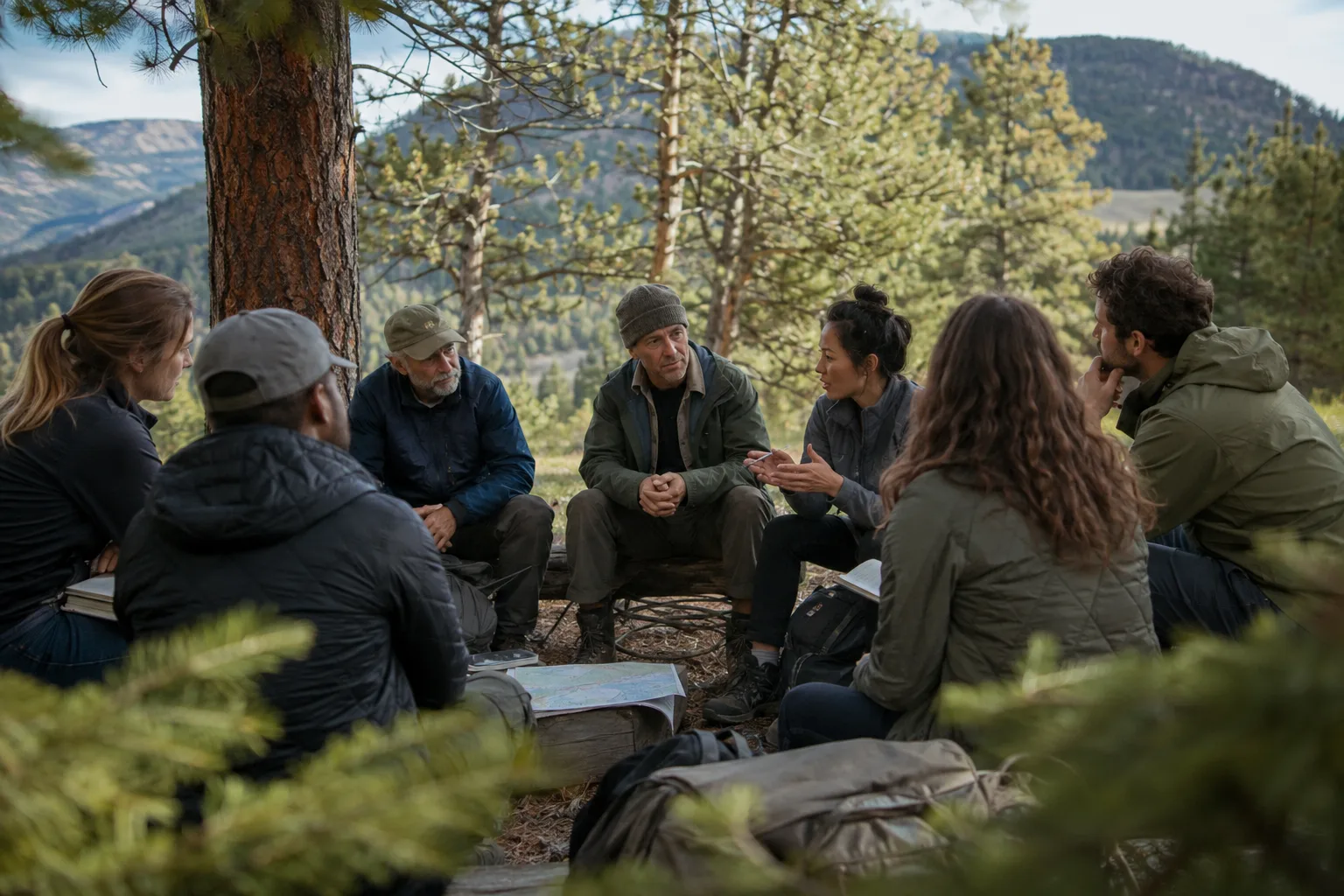
Northline programs are led by facilitators with experience in adult learning, organizational teams, and outdoor group leadership. The facilitator team is matched to the program context and participant needs.
We discuss access, exertion, weather, and participation expectations before a scope is confirmed. If a field format cannot serve the whole group well, we adapt the format or recommend a different setting.
Plan a program